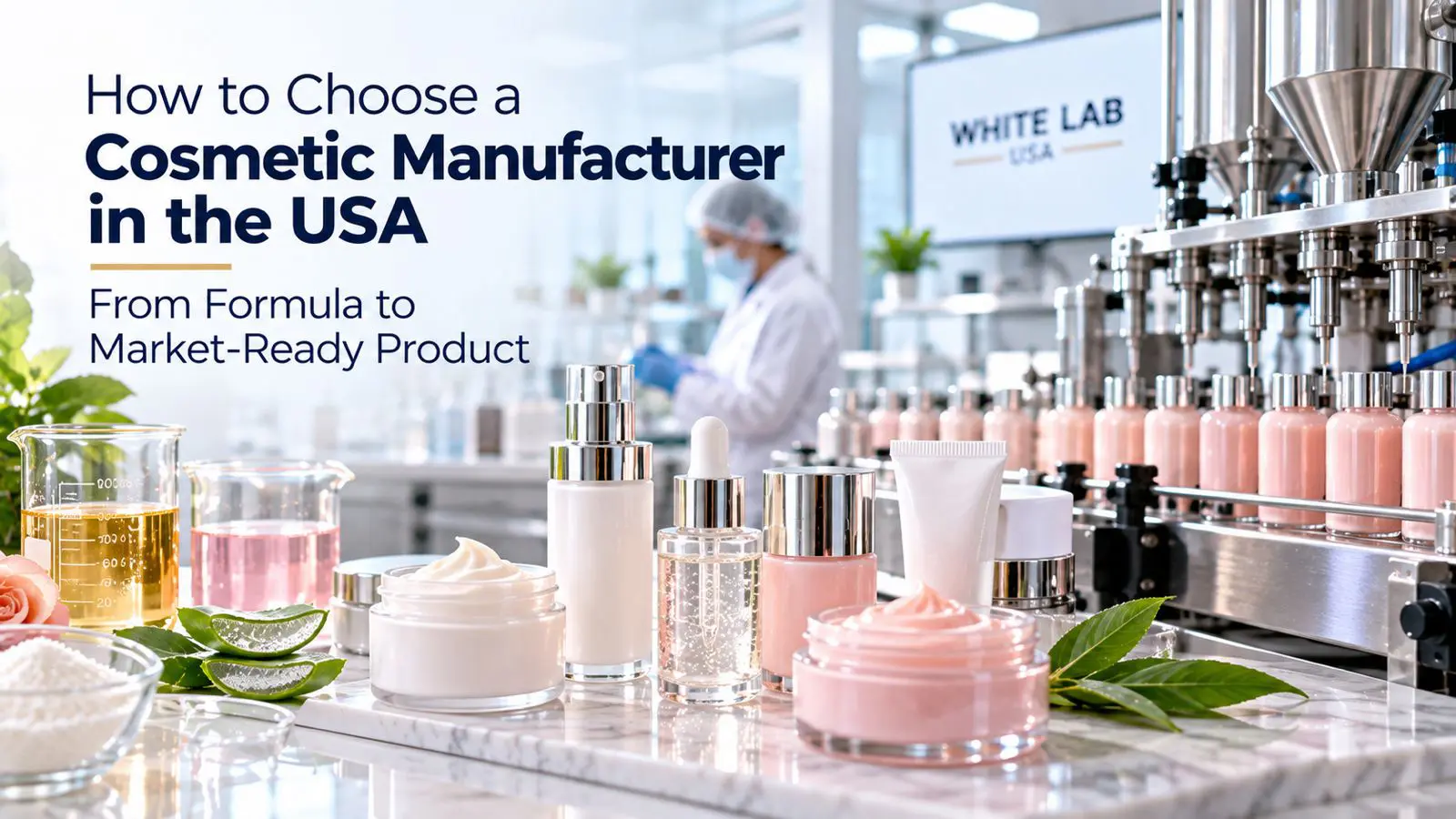
Launching a cosmetic product requires more than a strong brand concept. The formula, ingredients, manufacturing process, packaging, labeling, safety documentation and production strategy all need to work together before a product reaches the market.
For brands looking for a cosmetic manufacturer in the USA, choosing the right manufacturing partner can influence product quality, development speed, scalability and regulatory readiness.
This guide explains the major questions a brand should consider when moving from a cosmetic concept to commercial production in the United States.
1. Define the Product Before Choosing the Manufacturer
The manufacturing process should begin with a clear product brief. A brand should define what it wants to create, who the product is for, the desired texture and sensory experience, key ingredients, packaging format, target price and intended sales channels.
A facial serum, body lotion, cream, scrub and hair-care product may all fall within the broader cosmetics category, but they can require very different formulation and manufacturing processes.
The more clearly the product is defined at the beginning, the easier it is to evaluate whether a manufacturer has the appropriate R&D, processing and filling capabilities.
2. Decide Between Private Label and Custom Formulation
Brands generally approach cosmetic manufacturing through one of two paths.
Private Label Cosmetics
Private label manufacturing can use an established formulation platform that is branded and configured for a client’s product line. This route can be useful when the priority is a more streamlined development process.
Custom Cosmetic Formulation
Custom development is appropriate when the formula itself is central to the product’s differentiation. A manufacturer with product development and R&D capabilities can evaluate ingredient compatibility, texture, viscosity, fragrance, appearance, packaging compatibility and manufacturing feasibility together.
White Lab USA can work with client-provided specifications or develop a product around a new concept, depending on the project.
3. Formulation Must Be Designed for Commercial Manufacturing
A laboratory sample and a commercially scalable formula are not always the same thing. Larger batch sizes introduce different mixing conditions, temperatures, processing times, equipment and filling requirements.
A manufacturer should therefore evaluate scalability during development rather than waiting until the formula has already been finalized.
The objective is to create a product that can be manufactured repeatedly and consistently, not simply a prototype that performs well once.
4. Ingredient Selection Affects More Than Marketing
Commercial beverage manufacturing requires a repeatable process. Batch preparation, mixing sequence, processing parameters, filling operations and packaging specifications need to work together.
Ask the manufacturer how the product moves from approved formula to production and which specifications need to be finalized before a run is scheduled.
Ingredients influence product performance, sensory characteristics, manufacturing requirements, labeling and claims. They may also affect color, fragrance, viscosity and compatibility with the selected package.
Brands should distinguish between ingredients chosen primarily for consumer appeal and ingredients that are necessary to achieve the intended product performance.
When a brand wants to make specific claims, those claims should be reviewed separately to determine whether they are appropriate for a cosmetic product and adequately supported.
A strong development process should be designed to reduce surprises when a laboratory or pilot formula becomes a commercial batch.
5. Packaging Should Be Evaluated With the Formula
Packaging is not only a design decision. The formula and package need to work together.
Viscosity can affect whether a product works with a pump, dropper, tube or jar. Certain ingredients may also interact with packaging materials, while the filling process can impose its own dimensional and operational requirements.
An integrated co-packing and packaging program can help coordinate filling, labeling, assembly and finished-product preparation with the manufacturing process.
6. Understand the Current U.S. Cosmetic Regulatory Framework
The Modernization of Cosmetics Regulation Act of 2022, commonly known as MoCRA, significantly expanded the federal regulatory framework for cosmetics in the United States.
Under current FDA requirements, owners or operators of facilities that manufacture or process cosmetic products are generally required to register applicable facilities and renew those registrations every two years, subject to statutory exemptions. The FDA provides current information through its Registration & Listing of Cosmetic Product Facilities and Products resources.
The responsible person for each marketed cosmetic product generally must also list the product with FDA, including product ingredients, and provide required updates. Certain small businesses and specific products may qualify for exemptions, so the requirements should be evaluated for the actual product and business.
Importantly, facility registration and cosmetic product listing are not FDA approval programs.
Packaging is not simply a design decision. Container type, closure, fill volume, label dimensions, secondary packaging and case configuration can affect the production process.
A beverage can have an excellent formula and still encounter delays if the selected package is not coordinated with filling and production requirements.
For this reason, packaging should be evaluated while the product is being developed – not after the formula has already been approved.
For projects requiring coordinated filling and finished-product preparation, review White Lab USA’s manufacturing and co-packing services.
7. Do Not Confuse FDA Registration With FDA Approval
This distinction is especially important for brands and retailers.
In September 2026, the FDA specifically clarified that it does not provide certificates or other documents verifying compliance with cosmetic facility registration or product listing. The agency also states that a registration number or product listing number does not indicate FDA approval. Brands can review the FDA’s September 2026 clarification for the current position.
A manufacturer or brand should therefore avoid marketing language that inaccurately suggests that a cosmetic product or facility has been ‘FDA approved’ merely because registration or listing requirements have been completed.
8. Ask How Safety and Quality Are Managed
A cosmetic manufacturing relationship should include a clear discussion of product specifications, raw-material controls, batch documentation, manufacturing procedures, quality checks and finished-product expectations.
The exact testing and documentation program depends on the formula, packaging, intended use and project requirements.
Brands should ask how specifications are established, how deviations are handled and what information will be available for each commercial production run.
9. Claims Can Change the Regulatory Picture
Cosmetic claims require careful attention. In the United States, a product’s intended use can affect whether it is regulated only as a cosmetic or also as a drug.
The FDA maintains guidance explaining whether a product is a cosmetic, a drug, or both.
A product marketed to cleanse, beautify or alter appearance may fit within the cosmetic framework, while claims to treat or prevent disease or affect the structure or function of the body can trigger drug requirements.
Claims should therefore be reviewed before packaging and marketing materials are finalized.
10. Choose a Manufacturer That Can Scale With the Brand
A manufacturer should be evaluated not only for the first order but also for the next stages of the product.
A successful brand may need additional SKUs, new fragrances, different package sizes, larger production runs or line extensions. Moving production after launch can require additional validation, packaging changes and operational work.
A manufacturing partner with broader formulation, production and packaging capabilities can make future expansion easier to manage.
From Beverage Concept to Commercial Production
A typical custom beverage project can be viewed as a sequence:
Step 1 — Product Brief
Define the product type, target consumer, ingredients, texture, fragrance, package and commercial objectives.
Step 2 — Formula Review or Development
Evaluate an existing formula or begin custom formulation and R&D.
Step 3 — Sampling and Refinement
Review texture, appearance, fragrance, application and overall product experience.
Step 4 — Packaging Compatibility
Confirm that the formula and selected package work together and are suitable for the intended filling process.
Step 5 — Label & Claims Review
Evaluate ingredient declarations, required label information and marketing claims for the specific product.
Step 6 — Commercial Manufacturing
Transfer approved specifications into controlled, repeatable production.
Step 7 — Filling, Packaging & Scale
Complete the finished-product configuration and plan future production as demand develops.
Private Label & Custom Cosmetic Manufacturing With White Lab USA
White Lab USA provides private label and custom cosmetic manufacturing for emerging brands, established companies and commercial programs seeking a U.S. manufacturing partner.
Depending on the project, our capabilities can support product development, custom formulation, manufacturing from client-provided specifications, filling, packaging coordination and finished-product preparation.
White Lab USA has been manufacturing in the United States since 2010. Our objective is to combine flexibility in development with the manufacturing infrastructure required to support continued commercial production.
If you are developing a cosmetic product or evaluating a new manufacturing partner, contact White Lab USA to discuss your concept, formula, packaging and production requirements.
White Lab’s manufacturing experience began in France in 2010, with U.S. operations established in 2017. Today, the company combines product development, manufacturing, quality control, filling, packaging and project coordination within one manufacturing organization.
Whether you are developing a new beverage or looking for a manufacturing partner for an existing product, contact White Lab USA to discuss your formula, format, packaging and production requirements.
Frequently Asked Questions About Cosmetic Manufacturing
What should I look for in a cosmetic manufacturer in the USA?
Evaluate formulation and R&D capabilities, manufacturing experience, quality systems, packaging compatibility, filling capabilities, regulatory awareness, scalability and communication.
Can a cosmetic manufacturer develop my formula?
A manufacturer with formulation and R&D capabilities may be able to develop a custom formula from a product brief or adapt an existing client formula for commercial manufacturing.
Does FDA approve cosmetic manufacturers?
Cosmetic facility registration and product listing are not FDA approval programs. FDA has specifically clarified that registration or listing numbers do not indicate approval.
How often must an applicable cosmetic facility registration be renewed?
Under MoCRA, persons required to register cosmetic product facilities generally must renew those registrations every two years, subject to applicable exemptions and requirements.
Does White Lab USA manufacture private label cosmetics?
Yes. White Lab USA supports private label and custom cosmetic manufacturing projects, including formulation, manufacturing and packaging coordination depending on project requirements.
Editorial note: Regulatory information is general and sourced to FDA resources current as of September 30, 2026. Product-specific requirements depend on the formula, claims, process, packaging, facility and distribution model.