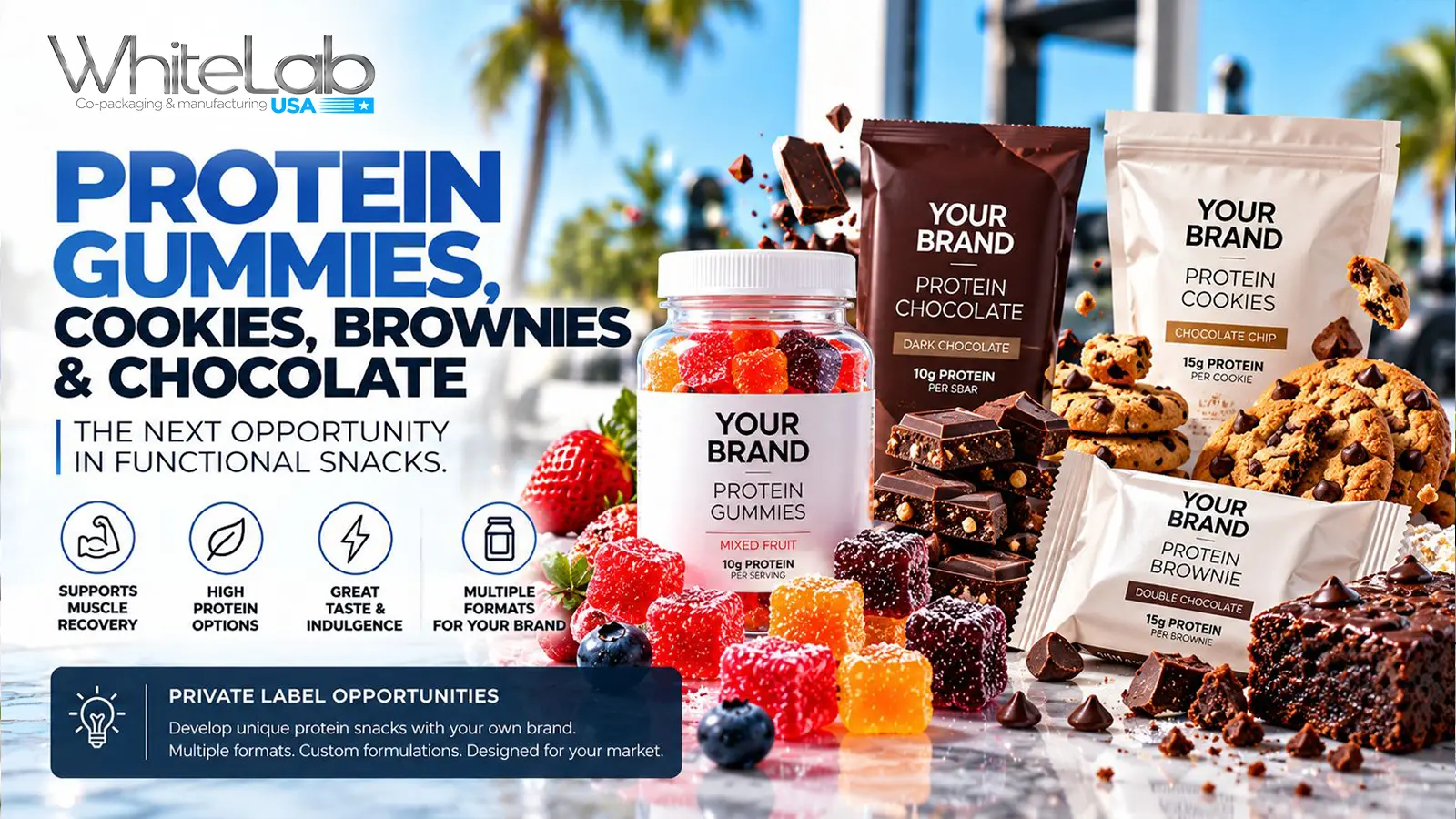
Protein is no longer confined to a shaker bottle. As brands rethink how consumers enjoy everyday nutrition, protein gummies are emerging as an intriguing product-development concept—alongside protein chocolate, cookies and brownies. For businesses looking beyond conventional powders and bars, the bigger opportunity is to create functional snacks that people actually want to eat.
The appeal is straightforward: familiar treats can give brands new occasions to connect with consumers. But success depends on more than placing “protein” on the front of a package. Flavor, texture, meaningful protein content, portion size and a credible brand position all matter.
1. Protein Gummies: A Different Way to Think About Protein
Gummies are familiar, portable and easy to integrate into daily routines. For supplement and wellness brands, that makes protein gummies a compelling concept to explore. They may fit a small-format, portion-controlled offering, a lifestyle-oriented collection or a broader functional snack portfolio.
The key question is not whether a gummy can contain protein—it is how much protein a consumer can realistically receive in an enjoyable serving. Protein sources behave differently in gummy systems, and meaningful protein loading can affect chew, clarity, taste, water activity and stability. A protein gummy should not be positioned as automatically equivalent to a high-protein shake or bar.
Brands evaluating private label protein gummies should define the intended consumer, serving format, target protein amount and sensory expectations before choosing a formulation approach. A strong concept starts with a product people would willingly purchase again.
2. Protein Chocolate: A Familiar Treat With a Functional Twist
Chocolate gives brands an established sensory experience to build on. Protein-enriched chocolate bars, bite-size pieces and coated treats may appeal to consumers who want something indulgent without leaving the functional-snack category.
Product design is especially important here. Protein ingredients can change chocolate texture, sweetness perception and mouthfeel. The right balance between taste, protein content and product identity is essential. Brands can explore dark, milk-style or flavored concepts, depending on the desired positioning and ingredient system.
3. Protein Cookies: Bringing Function to an Everyday Favorite
Cookies offer a different consumption occasion from a supplement. They can be positioned as an afternoon snack, an on-the-go treat or a convenient addition to an active lifestyle. Familiar flavors—such as chocolate chip, double chocolate or peanut butter—help make the concept easy to understand.
For protein cookies, formulation choices influence spread, softness, shelf life and overall eating quality. The commercial objective is to deliver a cookie consumers enjoy first, with a nutritional proposition that adds value rather than compromises the experience.
4. Protein Brownies: Indulgence Meets Product Innovation
Brownies bring a rich, dessert-inspired identity to functional snacking. A protein brownie may appeal to shoppers seeking a more satisfying treat, while giving brands room to differentiate through flavor, portion size and packaging.
Texture is a critical consideration: consumers expect a brownie to be moist, rich and enjoyable. Protein selection, sweetener systems and packaging all affect whether a concept can meet that expectation over its intended shelf life.
5. Why Functional Protein Snacks Are an Opportunity for Brands
For entrepreneurs and established businesses alike, protein snacks can offer more than one path to market. A sports nutrition brand might expand beyond powders. A wellness brand might add a food-based offering. A specialty retailer or fitness business might explore a branded snack collection for its existing audience.
These are distinct products with distinct use cases. Gummies can emphasize convenience and novelty; chocolate can emphasize indulgence; cookies and brownies can emphasize familiar bakery experiences. Treating each format as a separate consumer proposition makes the portfolio more coherent than launching several products with identical messaging.
6. What Makes a Protein Snack Worth Buying Again?
A clear audience: Define who the product serves and when they will eat it.
A realistic protein target: Choose a protein amount that suits the serving size and finished format.
Great sensory quality: Prioritize flavor, texture and repeat-purchase appeal.
Thoughtful packaging: Match pack size, portability and presentation to the sales channel.
A distinctive brand story: Explain what makes the product different without relying on exaggerated claims.
7. Developing a Private Label Protein Snack Line
8. Turn a Protein Snack Idea Into a Brand Opportunity
Frequently Asked Questions About Private Label Protein Snacks
Can a brand develop private label protein gummies?
Protein gummies can be explored as a custom product concept. Achievable protein content, texture, flavor and production suitability depend on the proposed formulation.
Are protein gummies the same as protein bars or shakes?
Not necessarily. Serving sizes and achievable protein amounts can differ substantially, so brands should compare products based on their actual nutrition profiles.
Can chocolate, cookies and brownies contain added protein?
Yes, these are established product-development directions. The finished product must balance protein content with taste, texture and storage performance.
Which protein snack format should a new brand launch first?
The best starting point depends on the target customer, intended protein amount, retail channel and desired eating experience.
How do I start a custom protein snack project?
Begin with the target format, audience, flavor direction, serving size and packaging vision, then discuss development feasibility with a potential manufacturing partner.