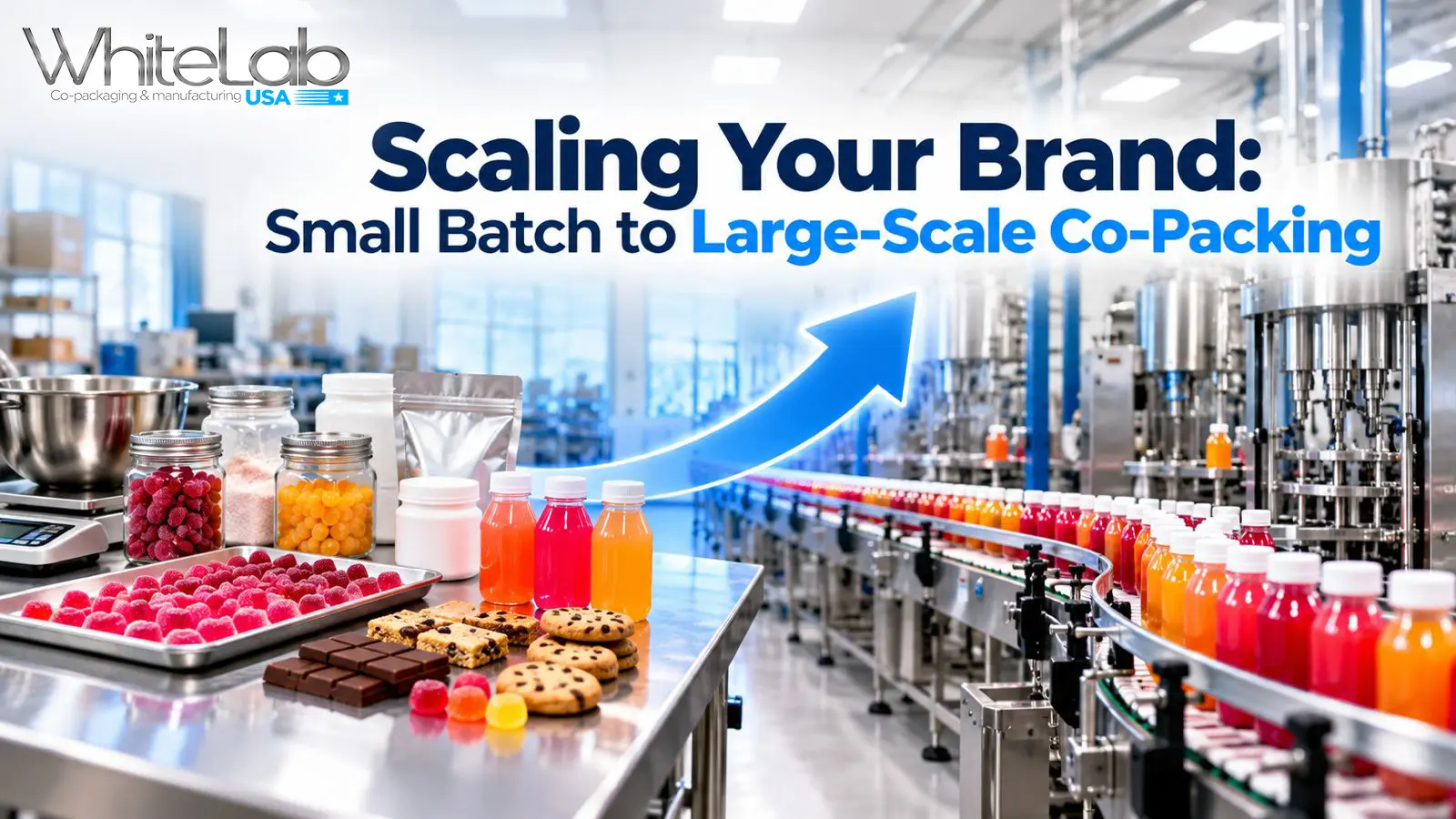
Scaling Your Brand: When and How to Transition from Small-Batch Production to Large-Scale Co-Packing
Launching a new product line is an exciting milestone for any brand. In the early stages, many entrepreneurs start with small-batch production to test the market, gather initial customer feedback, and refine their formulations. However, as demand grows, staying in small-batch manufacturing can quickly become a bottleneck—limiting your profit margins, stalling growth, and leading to constant stockouts.
Transitioning to large-scale contract manufacturing and co-packing is a critical growth phase. But how do you know when the right time has come, and how do you navigate the shift without disrupting your supply chain?
Here is a complete guide to scaling your private label production successfully in the USA.
1. The Tipping Point: Signs Your Brand is Ready to Scale
Before shifting to a commercial manufacturing partner with higher Minimum Order Quantities (MOQs), you need to ensure the market demand is genuinely sustainable. Look for these key indicators:
Consistent Out-of-Stock Situations: If your inventory regularly sells out before a new batch arrives, you are actively losing revenue and stunting your brand momentum.
Shrinking Production Costs & Improved Margins: Small-batch production carries a high cost per unit. Scaling up allows you to leverage economies of scale, significantly lowering your manufacturing costs per item.
Retail or Distribution Expansion: If regional or national retail buyers are showing interest—or if your e-commerce channels (Shopify, Amazon) are experiencing steady month-over-month growth—small-batch facilities will no longer have the capacity to keep up.
Operational Fatigue: If your team spends more time hand-packing, labeling, and managing micro-batches than focusing on marketing and sales, it’s time to hand the production over to an expert co-packer.
2. Key Challenges When Moving to Large-Scale Co-Packing
Scaling up is not just about producing more; it requires adapting your operations to a higher standard of industrial rigor.
Managing Minimum Order Quantities (MOQs): Commercial co-packers require larger runs to optimize their automated lines. You must forecast your cash flow accurately to handle higher upfront inventory costs.
Maintaining Product Consistency: Transitioning from a kitchen or boutique lab to a high-speed automated production line requires strict quality control (QC). Your custom flavors, textures (whether in gummies, beverages, or baked goods), and packaging must remain identical across thousands of units.
Regulatory and Compliance Standards: Larger production runs mean stricter scrutiny from agencies like the FDA, especially if you are expanding into functional foods, dietary supplements, or cosmetics.
Best Practices for a Smooth Transition with Your Manufacturer
A successful scale-up relies heavily on transparent communication with your manufacturing partner.
Audit Your Formulation First: Ensure your product formula is fully optimized and stable for commercial-scale machinery before starting a large production run. Your partner’s in-house R&D team can help test stability under different conditions.
Plan a Pilot Commercial Run: Don’t jump straight from 500 units to 50,000. Ask your manufacturer if a mid-tier test run is possible to evaluate the final packaged product, box sealing, and shipping durability.
Align Your Supply Chain and Fulfillment: Ensure your warehousing and logistics (such as 3PL partners or your fulfillment center) are ready to receive and store pallets rather than boxes.
Conclusion: Partnering for Long-Term Growth
Passer du statut de startup à celui de marque établie et scalable est la preuve ultime de l’adéquation produit-marché (product-market fit). En vous associant à un fabricant et co-packer américain expérimenté qui propose un accompagnement de A à Z – de l’affinage du produit au remplissage et au conditionnement automatisé – vous pouvez vous consacrer entièrement à ce que vous faites de mieux : développer votre marque et stimuler vos ventes.
Capsules, Tablets and Softgels Still Matter
Innovation does not mean abandoning traditional formats.
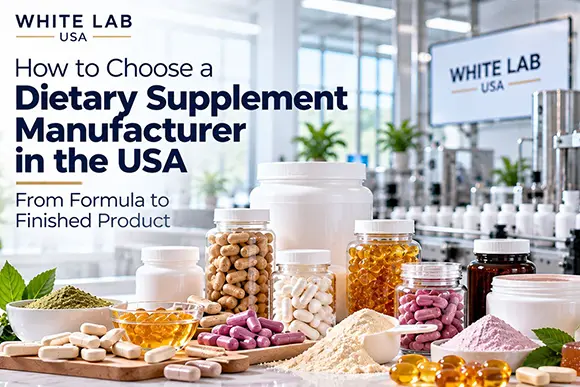
Capsules, tablets and softgels can remain appropriate for products where convenience, ingredient characteristics, consumer familiarity or a more traditional supplement experience are important.
The strongest product-development decision is therefore not automatically the newest format. It is the format that best aligns with the formulation, target consumer and commercial objective.
Ready to scale your product line? Contact our team today to discuss your production requirements and explore our flexible co-packing capabilities.